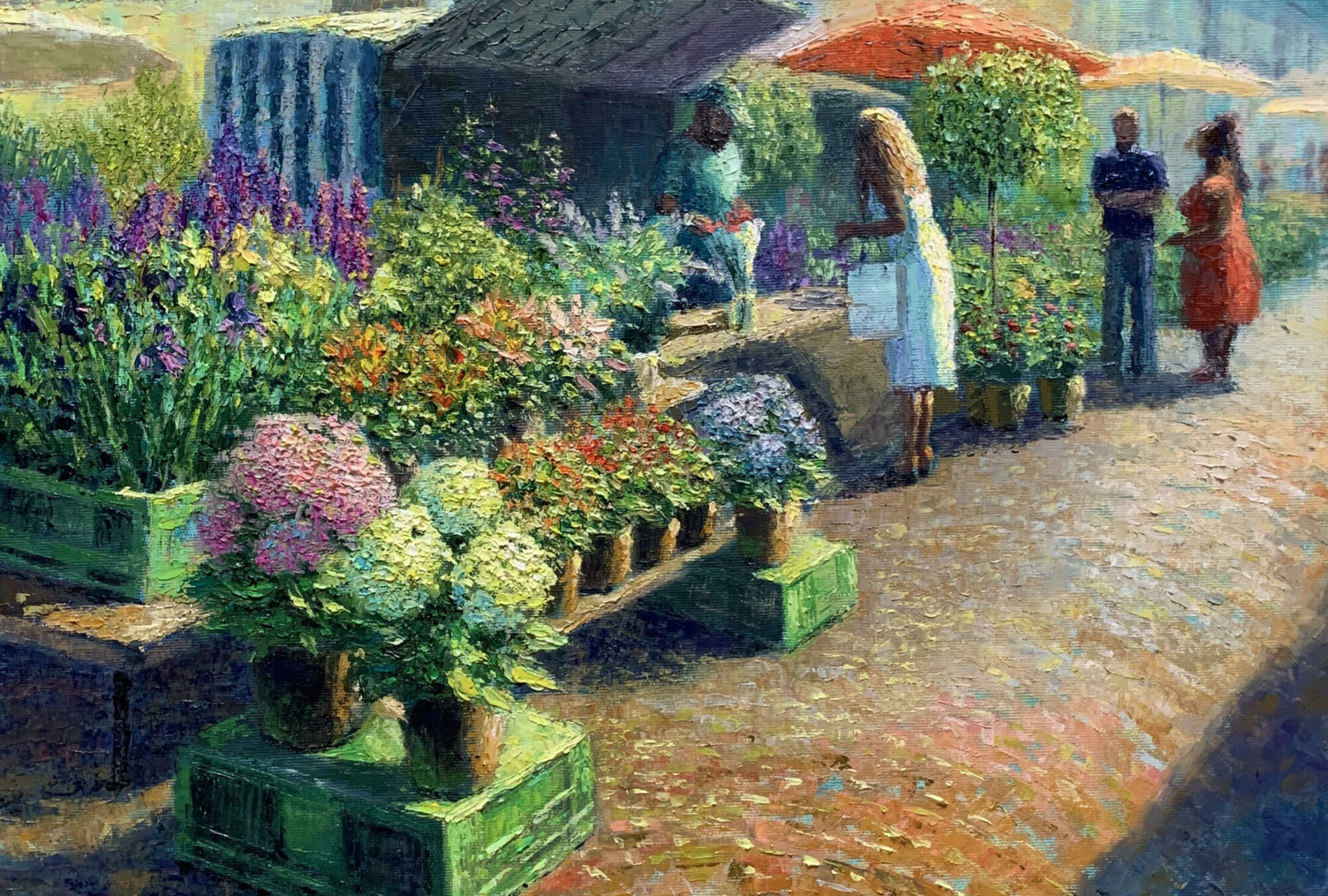
A painting is not only an object; it is a trace of a human consciousness. When an artist creates, they do not merely arrange forms and colors — they externalize perception, memory, and emotion. What remains on the canvas is a frozen moment of inner life. When another person later chooses that painting, something rare happens: two inner worlds meet without speaking.
We often believe we choose art, but it may be closer to the truth that art chooses us. Certain works arrest our attention while others pass unnoticed, even when they are technically excellent. This attraction is not accidental. It is shaped by personal history, emotional readiness, and unconscious needs. A painting becomes visible to us when we are capable of receiving what it contains.
The artist does not know the future owner, yet creates with sincerity, often from solitude. The owner does not know the artist personally, yet invites the artist’s perception into private space. This creates a paradoxical intimacy: strangers connected by a shared emotional frequency. The painting becomes a medium through which two subjective realities briefly align.
Why do we return to certain images again and again? Because they mirror something unresolved, something remembered, or something desired. Art functions as a psychological echo. We recognize ourselves not in the artist, but in the emotional structure of the work. In this sense, choosing an artist is not admiration alone — it is identification.
There is also an ethical dimension to ownership. To live with an artwork is to accept responsibility for its presence. The owner becomes the caretaker of a fragment of another person’s inner life. The artist, in turn, relinquishes control and allows the work to be reinterpreted, misunderstood, or deeply loved. The painting begins a second existence, no longer belonging entirely to its maker.
This transfer raises a profound question: where does the meaning of art truly reside? In the intention of the artist, or in the experience of the viewer? Perhaps meaning exists only in the space between them — in the dialogue that continues silently, day after day, as the owner walks past the painting and the painting continues to look back.
Thus, the connection between artist and owner is not contractual, not even personal in the ordinary sense. It is existential. It is the meeting of two ways of being in the world, mediated by pigment and surface. What binds them is not taste, but resonance — the moment when one consciousness recognizes itself in the trace of another.
And perhaps this is why we choose particular artists: not because they decorate our walls, but because, in some quiet way, they understand something about us before we fully understand it ourselves.