Impressionism vs. Expressionism – What’s the Difference?!
Art history is often told as a sequence of movements reacting to one another, and few contrasts illustrate this better than Impressionism and Expressionism. Though sometimes confused by casual viewers, these two movements differ profoundly in intent, technique, and philosophy. One seeks to capture the fleeting appearance of the world; the other strives to reveal the artist’s inner emotional reality.
Understanding the distinction enriches not only our view of art, but also our experience of it.
Impressionism: The Art of Observation
Emerging in France in the late 19th century, Impressionism was a radical break from academic painting. Artists such as Claude Monet, Pierre-Auguste Renoir, and Camille Pissarro shifted their focus from historical and mythological subjects to everyday life, landscapes, and modern scenes.
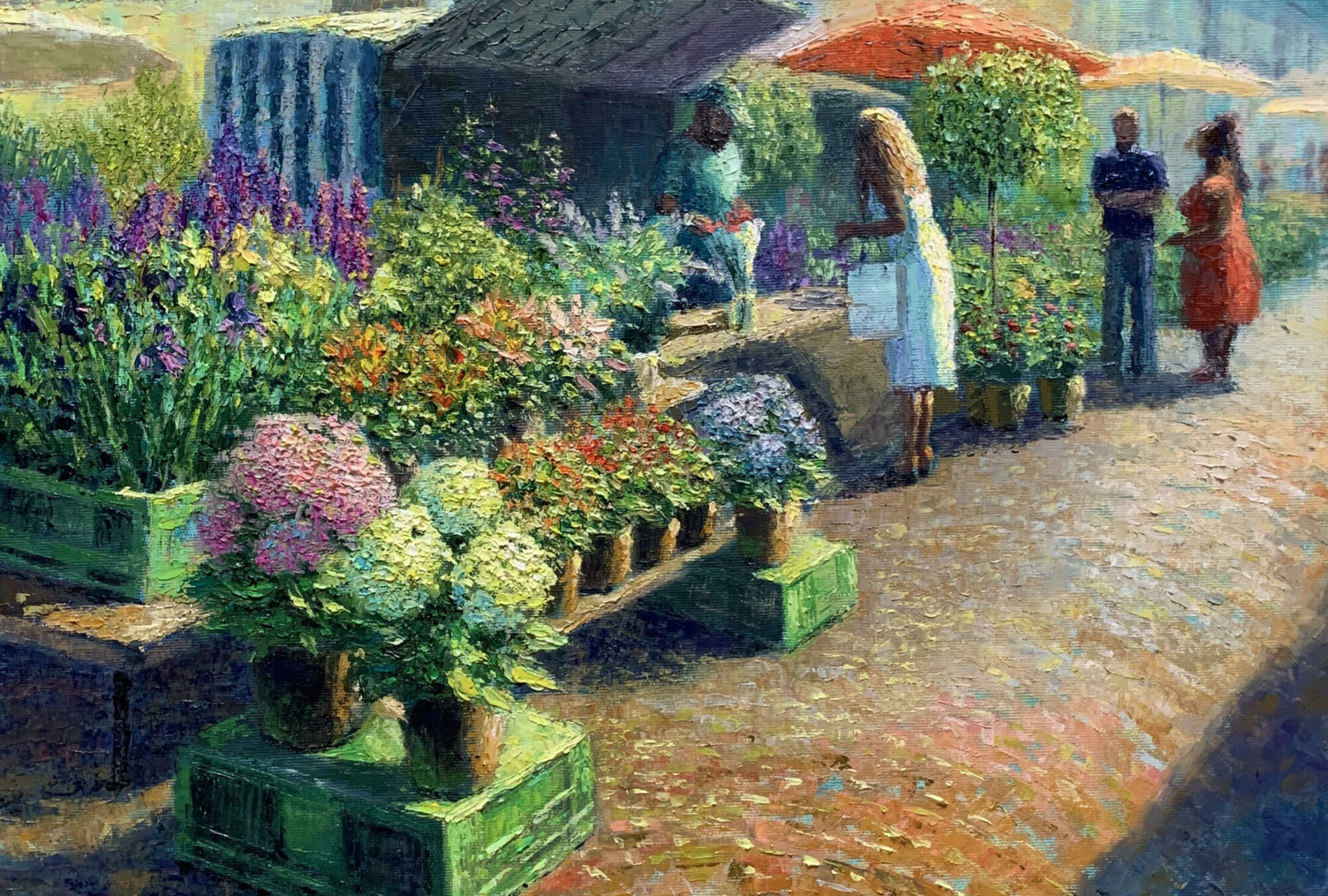
At its core, Impressionism is concerned with light, atmosphere, and perception.
Key characteristics of Impressionism include:
- Painting en plein air (outdoors) to capture natural light.
- Loose, visible brushstrokes.
- Bright, unmixed colors placed side by side.
- Emphasis on fleeting moments—changing skies, reflections, movement.
- Objective observation rather than personal symbolism.
Rather than carefully outlining forms, Impressionists allowed shapes to dissolve into light and color. The subject is less important than how it appears at a specific moment. The viewer becomes aware of seeing itself—how light changes, how color vibrates, how the eye assembles an image.
Impressionism asks:
“What does the world look like right now?”
Expressionism: The Art of Emotion
Expressionism, which developed in the early 20th century primarily in Germany and Northern Europe, took an entirely different path. Artists such as Edvard Munch, Ernst Ludwig Kirchner, and Wassily Kandinsky rejected the idea that art should reflect external reality at all.
Instead, Expressionism is driven by emotion, psychology, and subjective experience.
Key characteristics of Expressionism include:
- Distorted or exaggerated forms.
- Non-naturalistic, often intense or symbolic color.
- Aggressive or highly gestural brushwork.
- Emotional or psychological themes.
- Inner experience prioritized over visual accuracy.
Expressionist artists deliberately altered reality to communicate feelings such as anxiety, joy, fear, alienation, or spiritual tension. Perspective may feel unstable; figures may appear raw or fragmented. The painting becomes a direct extension of the artist’s inner state.
Expressionism asks: “What does this moment feel like inside me?”
Observation vs. Interpretation
The essential difference between the two movements lies in where meaning originates.
Impressionism begins with the external world and translates visual sensation onto the canvas.
Expressionism begins within the artist and reshapes the world to fit emotional truth.
An Impressionist sunset records how light touches water.
An Expressionist sunset might turn the sky red to express longing or unrest.
Neither approach is more “truthful” than the other—they simply pursue different kinds of truth.
Why the Difference Still Matters Today
Contemporary artists often blend elements of both movements, but understanding their distinction remains valuable for collectors and viewers alike.
If a work draws you in through atmosphere, color harmony, and quiet observation, it may carry an Impressionist sensibility.
If a work grips you through raw energy, emotional intensity, or symbolic distortion, it may lean toward Expressionism.
Recognizing this difference deepens engagement and helps articulate why certain works resonate emotionally or visually.
Two Ways of Seeing, One Purpose
Impressionism and Expressionism represent two fundamental impulses in art:
- To see the world clearly.
- To express the inner self honestly.
Together, they remind us that art is not just about representation, but about experience—whether that experience comes from standing in the light of a summer afternoon or confronting the depths of human emotion.
Both continue to shape how artists create and how we, as viewers, connect with art today.