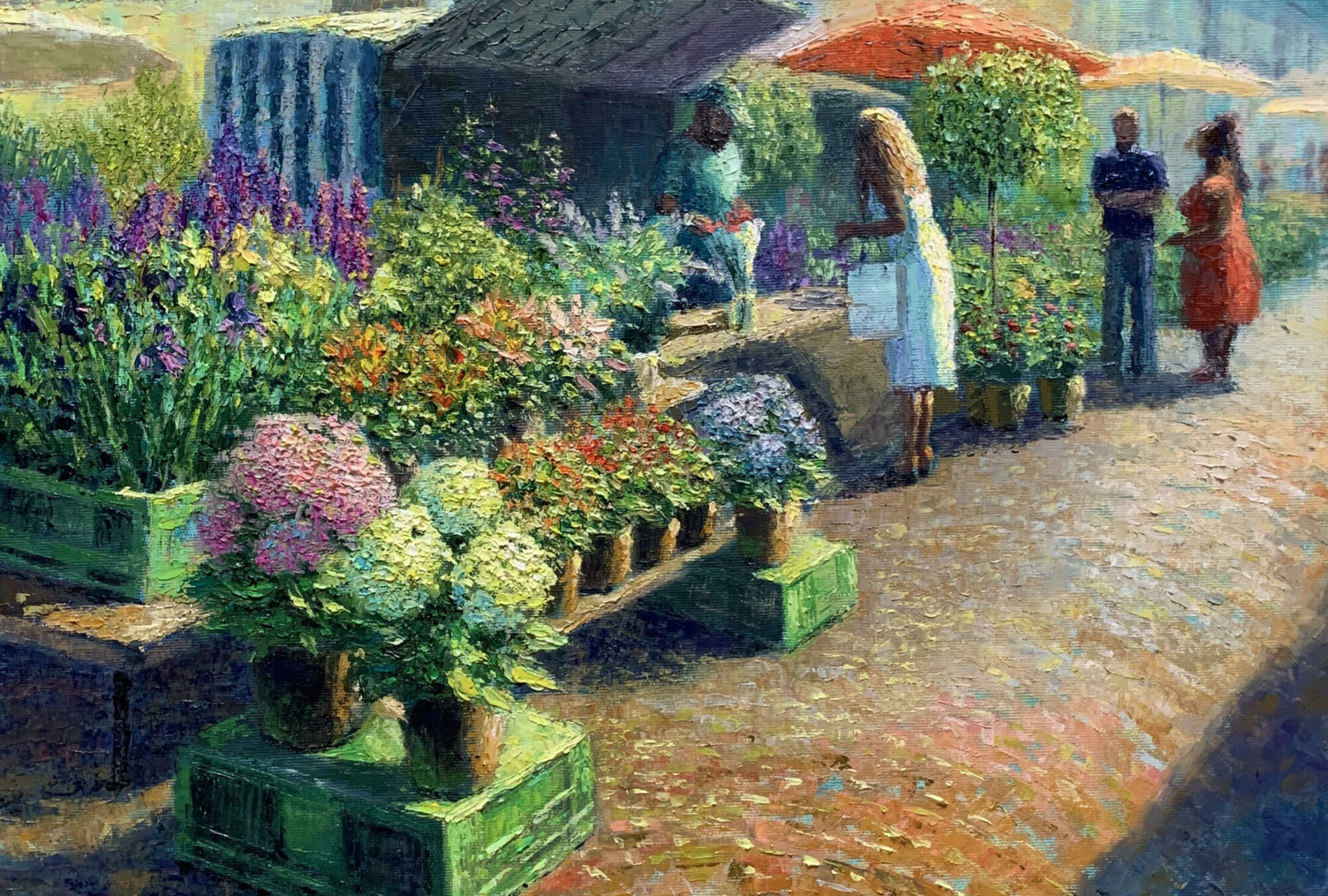
Impressionism is one of the most beloved styles in painting, yet it is often misunderstood. Many people associate it simply with “loose brushwork” or “unfinished paintings.” In reality, Impressionism is highly intentional. It is not about lack of detail — it is about choosing which details matter. If you want to recognize impressionistic work, here is what to look for.
1. Light Is the True Subject.
In Impressionism, light is not just illumination — it is the main character.
Look for:
- glowing highlights
- shifting color in shadows
- light that feels alive, not static
Instead of painting objects, the artist paints how light touches those objects. If you feel the time of day (morning, afternoon, twilight), you are likely looking at impressionistic work.
2. Visible, Expressive Brushstrokes
Impressionist paintings do not hide the process.
Look for:
- visible strokes
- broken color (small strokes of different hues)
- texture (sometimes thick paint, sometimes dry)
Up close, the painting may look fragmented.
From a distance, it resolves into a cohesive image. The brushstroke is not a flaw — it is the language of the painting.
3. Color Over Detail
Impressionism avoids tight, literal rendering.
Instead of:
- outlining every object
- defining every edge
you will see:
- colors blending optically
- forms suggested rather than described
A face, a tree, or a building may not be sharply defined — yet it feels convincing. The eye completes what the brush only suggests.
4. Edges That Breathe
In academic painting, edges are controlled and precise. In Impressionism, edges are alive.
Look for:
- soft, disappearing edges
- areas where forms merge into light
- selective sharpness (only where the artist wants focus)
Not everything is equally clear — and that is intentional.
5. Everyday Subjects, Elevated
Impressionists often paint ordinary scenes:
- streets
- cafés
- gardens
- people in passing
What makes them special is not the subject, but the moment. The ordinary becomes extraordinary through light and atmosphere.
6. A Sense of a Moment (Not a Frozen Scene)
Impressionism captures something fleeting:
- a passing shadow
- a reflection in motion
- a glance, not a pose
The painting feels like a slice of time, not a staged composition. If it feels like it could change in the next second — that’s a clue.
7. Shadows Are Not Black
One of the most important signs:
Shadows in impressionistic work are colorful.
Look for:
- blues, purples, greens in shadows
- warm/cool contrast
- reflections inside shadow areas
Black is rarely used straight. Shadows carry light within them.
8. Composition Guided by Light, Not Objects
In impressionistic work, composition is often driven by:
- where the light falls
- contrast between light and shadow
- color relationships
Not necessarily by:
- perfect symmetry
- classical balance
Your eye is led by brightness, not by lines.
Impressionism is not about painting less — it is about seeing more.
It asks you to look beyond objects and notice what is constantly changing: light, color, atmosphere, and time.
The question is not: “Is this realistic?”
The question is: “Does it feel real?”